

LinkedIn Has Changed the Rules: Is Your Med Device Social Playbook Outdated?
The Algorithm Shift, Part 3: The evolution of MedTech Marketing on LinkedIn
Editor's Note: This is Part 3 of a 3-part series exploring the evolution of social media platforms and their implications for MedTech Marketing. See Part 1 (Facebook Evolution) and Part 2 (Twitter -X Evolution)
Article Summary:
The Problem: LinkedIn platform has evolved dramatically since its founding in 2003 and the old rules don’t apply.
The Solution: To build a successful presence on LinkedIn today, brands must understand how the current algorithm works and adapt to it.
The MedTech Reality: Organic growth is slow especially if you are new to the platform, but having a lot of followers doesn’t automatically mean you reach every one of them.
The Key Takeaway: LinkedIn is an incredibly relevant channel for MedTech brands today, especially as more HCPs migrate to the platform. However, because organic reach is naturally low, allocating a paid marketing budget is what will help drive your growth significantly faster.
The Evolution of LinkedIn and MedTech Marketing on LinkedIn
Posting on social media platforms today is like playing a game where the goalposts move while the ball is in the air. If you feel like you are losing the reach you once had, it’s not your content—it’s the algorithm. In this article, let’s review how the evolution of LinkedIn has changed the rules, and what MedTech marketers can do to adapt and stay relevant.
A Brief History
2003–2011: The Reverse Chronological Order & Organic Reach Era (No Algorithms)
LinkedIn, Facebook, and Twitter were all founded around the same time and have roughly followed the same algorithmic shifts over the years. Feed was displaying content in reverse chronological order. This meant there were no algorithms deciding what content users see; the newest posts appeared at the top of your feed, and early users enjoyed 100% organic reach. However, LinkedIn was built on a different model—connecting working professionals worldwide—while Facebook was connecting family and friends, and Twitter was everything in between.
I joined LinkedIn in 2011. From my personal experience back then, people didn’t inherently understand the utility of the platform. LinkedIn asked you for a lot of personal information, including your detailed work history, which was traditionally considered rather confidential. People were genuinely afraid to disclose that much—imagine having your full resume public. And this was far from when MedTech would join LinkedIn because social media for brands was not even a concept.
While you shared personal info on Facebook, you had options on how much you wanted to show, or you could remain anonymous if you wanted to lurk on the platform without actively engaging. Facebook also offered immediate value: instant connection and entertainment. So while people built LinkedIn accounts, the initial uptake was slow as everyone figured out what they were comfortable sharing. Another reason for a slower start was the paltform’s natural design: Facebook made it simple to invite friends, LinkedIn gave you the option to invite professional colleagues. But not everyone was confident inviting their peers, let alone their bosses. However, despite this, those early users who figured out the platform and actually posted enjoyed essentially 100% organic reach.
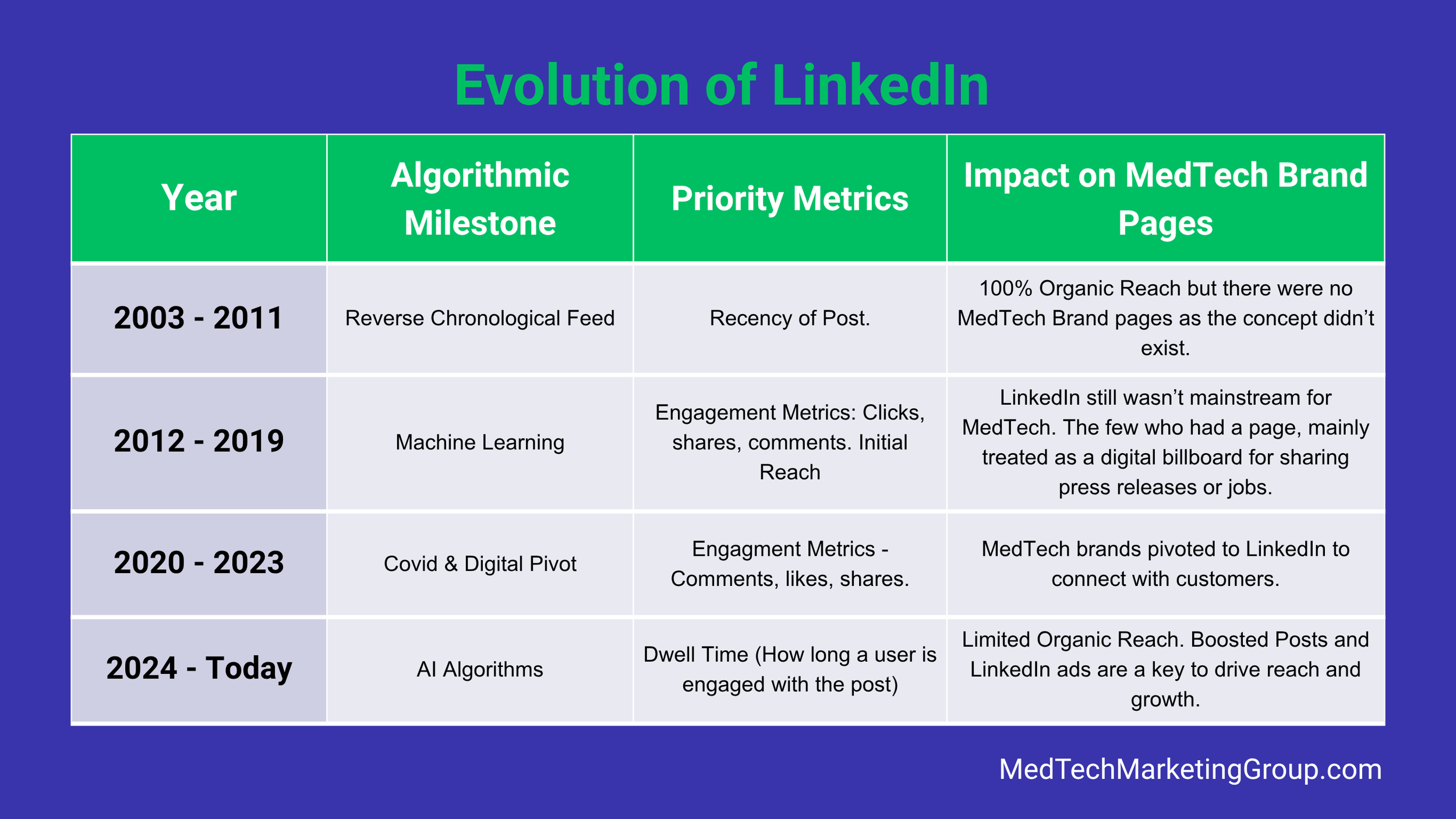
📊 [ ] Expand Data Table: Evolution of LinkedIn for MedTech Marketing
| Year | Algorithmic Milestone | Priority Metrics | Impact on MedTech Brand Pages |
|---|---|---|---|
| 2003 - 2011 | Reverse Chronological Feed | Recency of Post. | 100% Organic Reach but there were no MedTech Brand pages as the concept didn’t exist. |
| 2012 - 2019 | Machine Learning | Engagement Metrics: Clicks, shares, comments. Initial Reach | LinkedIn still wasn’t mainstream for MedTech. The few who had a page, mainly treated as a digital billboard for sharing press releases or jobs. |
| 2020 - 2023 | Covid & Digital Pivot | Engagment Metrics - Comments, likes, shares. | MedTech brands pivoted to LinkedIn to connect with customers. |
| 2024 - Today | AI Algorithms | Dwell Time (How long a user is engaged with the post) | Limited Organic Reach. Boosted Posts and LinkedIn ads are a key to drive reach and growth. |
2012–2019: Using Machine Learning Algorithms to Manage Engagement
This timeframe followed the exact same storyline as Facebook and Twitter—introducing an algorithm similar to "EdgeRank" to rank content. By this time, users had learned how to use LinkedIn and were sharing a lot of content. As posts accumulated likes and comments, it signaled to the platform to push that content into more newsfeeds. Once people commented or shared, your reach exploded.
In this era, likes and comments mattered, but comments ranked much higher. The overall size of your network mattered immensely. The more followers you had, the more baseline visibility your content received. If people commented or shared, it spread exponentially. If you were active on social media platforms at that time, you may remember when users and brands posting "like if you agree" content to drive reach and acquire followers. The bigger the network size, the more visibility and reach you had.
Eventually, LinkedIn had to fix this – just like the other platforms. They introduced the concept of Initial Reach—variations of which we still experience today. The platform shows your post to a small, sample group of users first to see if it generates interest and engagement. If it does, it opens the floodgates to wider feeds. (Fast-forward to today - LinkedIn algorithm uses 60 min window to see initial engagement on the content you post to understand whether to push it into more newsfeeds or not).
2020- 2023 The COVID-19 Pandemic and the Digital Pivot
“Covid - a curse for some, a growth spurt for others” - this is how I describe these years.
This is the era when many MedTech brands actually migrated to LinkedIn. Previously, MedTech corporate presences dominated Facebook and Twitter. The pandemic forced sales Reps out of clinical accounts and hospitals. Suddenly, the only way to interact with physicians and keep them informed of product news, developments and clinical updates was through digital channels.
Case In Point
At the time, I was leading the digital marketing and social media strategy for one of the products at a global medical device company. As the digital landscape shifted, we pivoted our strategy to LinkedIn, and not just Twitter.
Writing for LinkedIn was a completely different beast compared to Twitter, primarily because of how the audience consumed and engaged with content. On Twitter, posts were short-lived; within 24 hours, the audience had moved on. On LinkedIn, however, post engagement could last up to a week. Because the average professional or HCP didn’t log in daily or multiple times a day, long-form posts packed with high-quality clinical storytelling resonated incredibly well.
Social media strategy has spanned my entire career, so I understand how these algorithms work. I have always prioritized staying current on the changing digital landscape, so when it came time to build LinkedIn strategy, I pushed for long-form posts. I remember the hesitation from the teams I worked with. We had all been conditioned to believe that people have short attention spans and only want quick snippets. But my previous successes taught me that you have to be willing to try something new.
However, as I continue to work with other MedTech clients today, they still express the same hesitation: “Isn’t this post too long? Will doctors read it? Nobody reads long posts.”
As a data-driven marketer, I know firsthand that you can't know if something works unless you experiment. Digital marketing works on trial and error—testing new approaches until you find the one that works. And once you do, you ride that wave until it no longer works.
2024–2026: The Algorithmic AI Era and Dwell Time
LinkedIn followed suit with the rest of tech and rolled out an advanced ranking system powered by Large Language Models (LLMs) and Graphics Processing Units (GPUs). This system better understands exactly what a post is about and how it relates to a user's specific interests and career goals. The ultimate goal is to deliver accurate, helpful recommendations.
The key metric that LinkedIn prioritizes today is dwell time—how long a user stays engaged with your post. Do they click on the graphics? Do they watch the full video, click "see more," or read through the long text? Did they save your article?
This also means that LinkedIn wants users to stay on its platform, not leave it. If you put external links directly into your post copy, the algorithm heavily penalizes it and drops its distribution. This creates a massive implication for a MedTech company. Marketers must cite all clinical claims in the post copy, which traditionally meant including multiple external links to medical journals and publications.
Need help building an effective social media strategy for your product? Get expert guidance today.
Can You Build Your MedTech Brand Organically and Successfully on LinkedIn Today?
Pay for Play
In July, LinkedIn officially surpassed 1.3 billion users (according to LinkedIn)
Have you ever thought about why social media companies are so obsessed with user numbers? It’s a simple business math: when you grow your user base, you can sell more services.
Once these platforms hook their users, they suppress organic visibility. The exact same thing happened with LinkedIn. They realized they could drive a lot more revenue by making brands pay to display their content to the followers. This means brand pages—and even individual accounts—now pretty much need to purchase ads just to make sure their own followers can see what they post.
So today’s LinkedIn is not the same platform it used to be and the platform will continue to evolve. You can still manage your brand’s LinkedIn organically - unlike X - but it is going to take you much longer to build a good following and reach your target audience.
What can MedTech brands do to build a successful presence on LinkedIn?
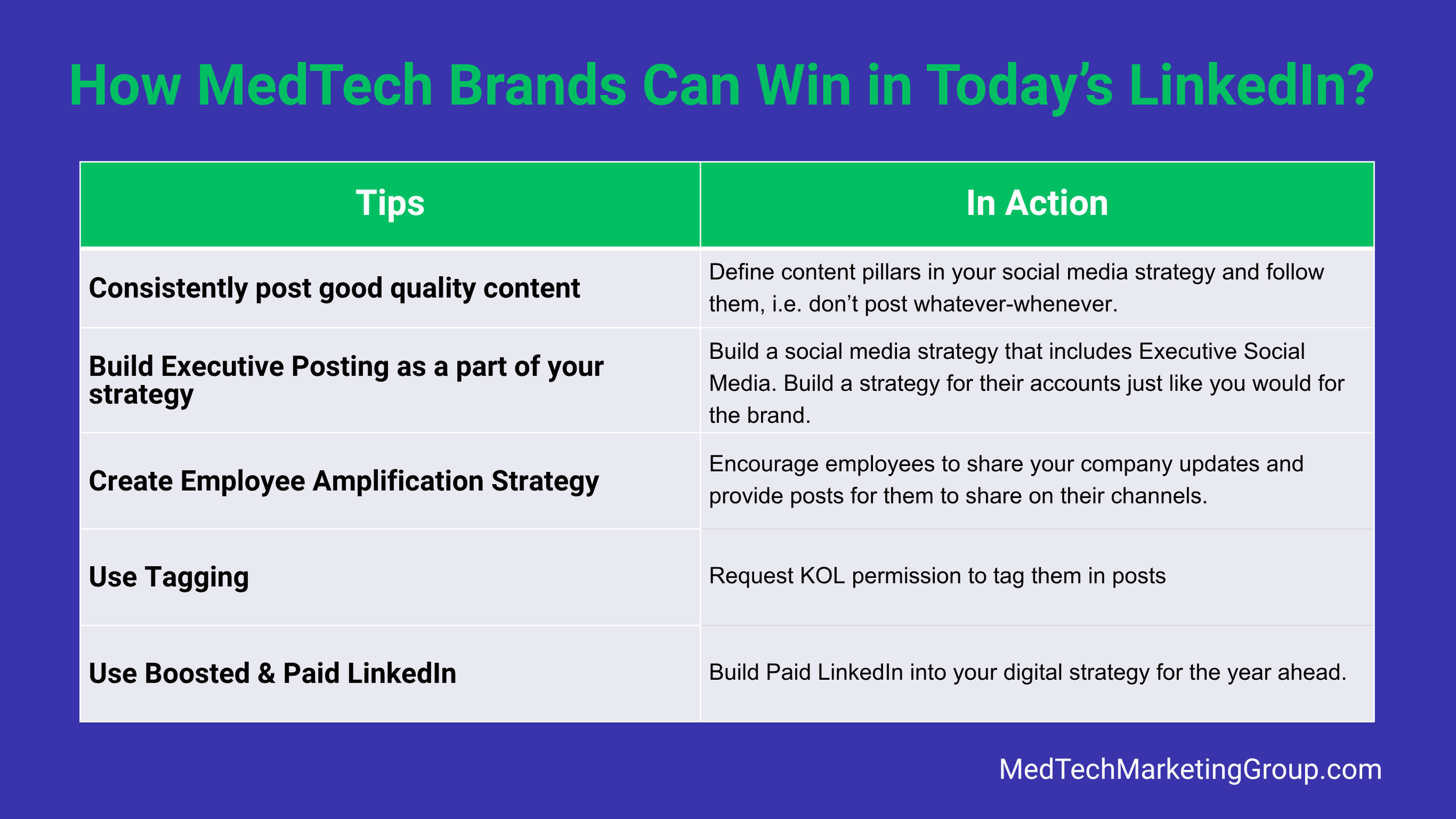
Consistently post good quality content aligned with your brand expertise: Deliver real value to your target audience. This helps the LinkedIn algorithm learn what your page is actually about and whose feeds to serve it into.
What does this look in action for MedTech brands? Define content pillars in your social media strategy and follow them, i.e. don’t post whatever-whenever.
Use Executive Posting as part of your strategy: Build a strategy for your executive and leadership team to post authentic, non-AI content. It shows the human side and the real connection behind the brand. The old adage is true: People buy from people, not brands. Your executives serve as the face of the company, and by properly leveraging their personal profiles, you can drive genuine connection with HCPs.
What does this look in action for MedTech brands? Build a social media strategy that includes Executive Social Media. Build a strategy for their accounts just like you would for the brand- create content pillars, voice, storyline.
Create Employee Amplification Strategy: Encourage employees to share your company updates and provide posts for them to share on their channels. Get your employees to comment on posts with deeper thoughts, not just superficial comments like “Great article!” and not just a simple share.
What does this look in action for MedTech brands? This one is incredibly important, but it’s very hard to achieve in the medical device industry because of compliance regulations. It’s hard, but not impossible.
Use tagging: Tag HCPs—with proper consent, of course—to organically drive your reach.
What does this look in action for MedTech brands? When creating content with HCPs, ask for consent to tag them and share created content upfront to save yourself time and permission later.
Use Boosted Posts: For those who actually have a marketing budget for LinkedIn, I highly recommend using the Boosted Posts feature instead of standard feed ads. Boosted posts allow you to show your content directly in the main feeds of your existing followers, as well as the exact job titles you are chasing.
What does this look in action for MedTech brands? Build Paid LinkedIn into your digital strategy for the year ahead. Allocate a decent amount you can experiment with and test creative, copy, targeting, seasonality, etc.
Case in Point
Today the LinkedIn feed is completely oversaturated with ads, and HCPs are among the most coveted demographics on the planet. I have been analyzing social media marketing data for years, and the costs we see today on LinkedIn are insane. There is always a big range in costs when you target HCPs because it depends entirely on the specialty you are after. But for certain niche specialties, the price tag is high.
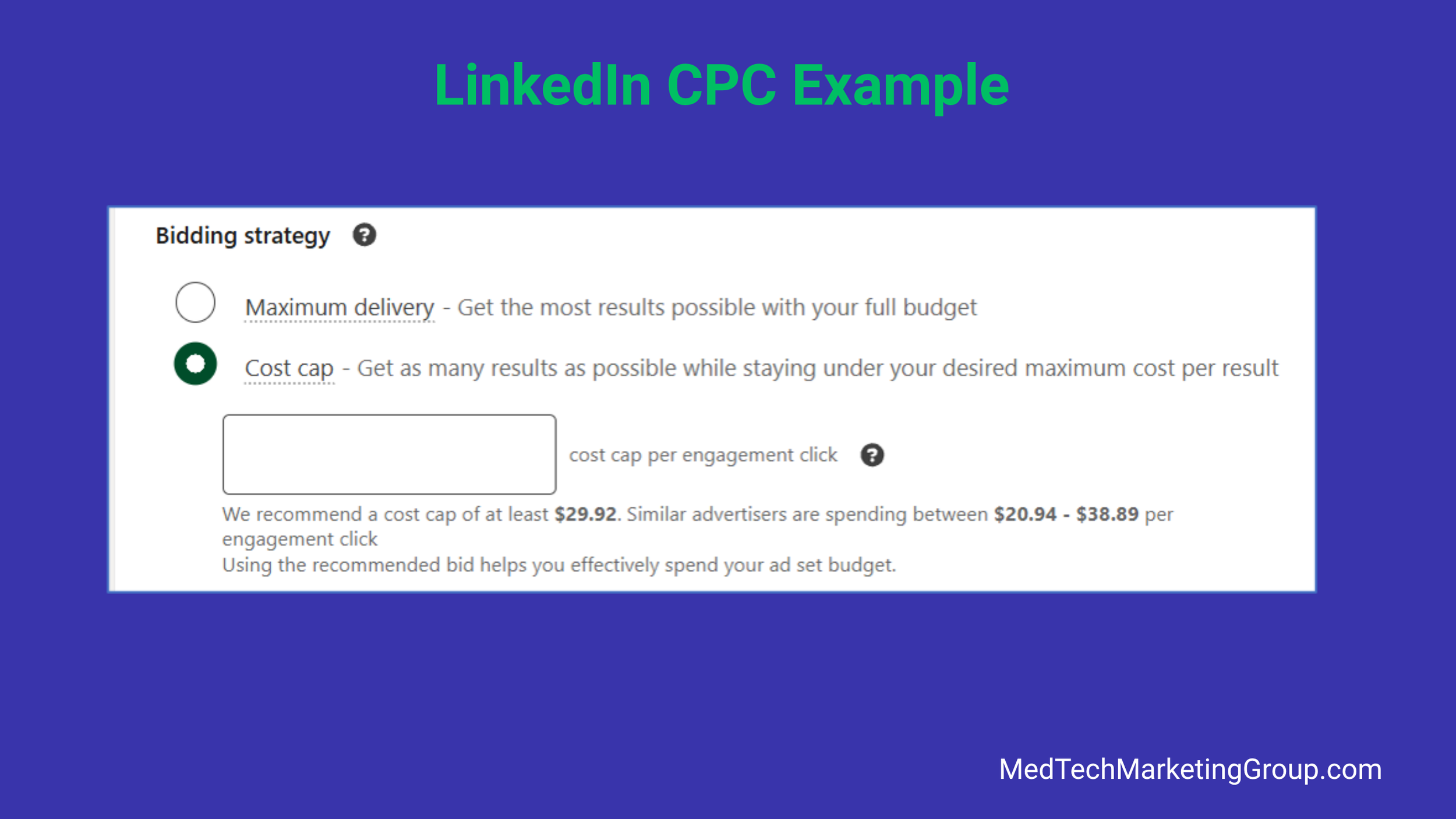
Look at the screenshot below from a paid LinkedIn strategy I recently built for a MedTech client—this is exactly what I'm working with. The cost per click (CPC) for this specific HCP audience segment and time frame ranges anywhere from $20 to $38, and it can easily run even higher during peak times, like a major medical congress, because so many brands are fighting for the exact same audience. For perspective - if your budget is $500/a month, you will get between 11 -17 clicks only.
In this example, LinkedIn suggests a cost cap of at least $29.92, meaning LinkedIn will bid to show your ad to your target audience, but will never exceed $29.92 to get a click. If you don’t set a cost cap, it will bid to display your ad at any price (because it’s primary goal is to show your ad), which means you can see a very high CPC.
Compare that to five years ago during COVID, when the average CPC was sitting around $3 to $4. It's a 10x increase. This just tells you there are big players out there—large medical device and MedTech companies who can afford to drop $10K a month on LinkedIn ads, while startups are left trying to make an impact on a lean $500 monthly budget.
Final Takeaway
The days of easy organic reach are over, but there are still ways for MedTech brands to stand out on today’s LinkedIn and grow your brand. By understanding the algorithm and focusing on delivering high-quality, valuable, and authentic content consistently—while strategically using boosted posts—you can reach the right audience, drive content engagement and accelerate your brand's growth.
